Space science
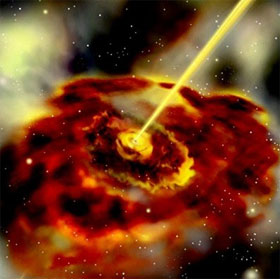
Decode the black hole secret in the Milky Way 2 million years ago
Astronomers have found a solution to the birth of these
Browse ScienceInfo articles and explainers related to Milky Way.
202 published items.
Astronomers have found a solution to the birth of these
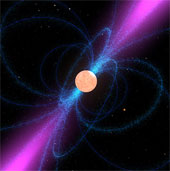
Scientists used a computer cloud, with the combined power of 200,000 personal computers, and found the new Milky Way's 24 metaphors.
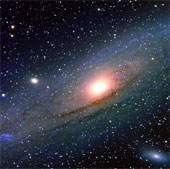
Our Milky Way weighs only about 1/4 to one third of the previously estimated mass, according to the latest analysis of the weight of dark matter in our galaxy.
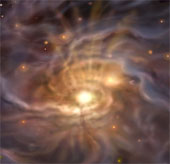
Astronomers are eager to observe the image of the largest known star in the Milky Way, thanks to modern telescopes in Chile.
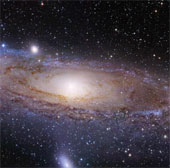
Spiral galaxies like our Milky Way are in fact larger than expected, according to a new study by Colorado Boulder University based on data collected from the Hubble Spac…
Researchers at the University of California at Santa Cruz (UCSC) in the US have run computer programs on galaxy formation, thus discovering that our Milky Way is probabl…
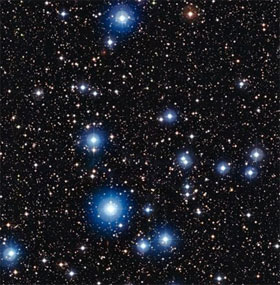
Some of the Milky Way stars must be 13 billion years old, but the production machine is constantly working to produce new generation of stars.
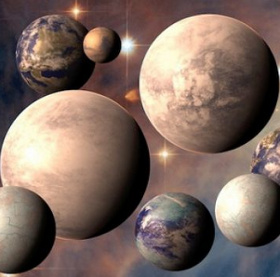
American astronomers predict the Milky Way is home to at least 100 billion stars and 100 billion planets.
On October 24, Chilean astronomers said that in a research program on the Milky Way, they created an image with about 84 million stars in the center of the universe.
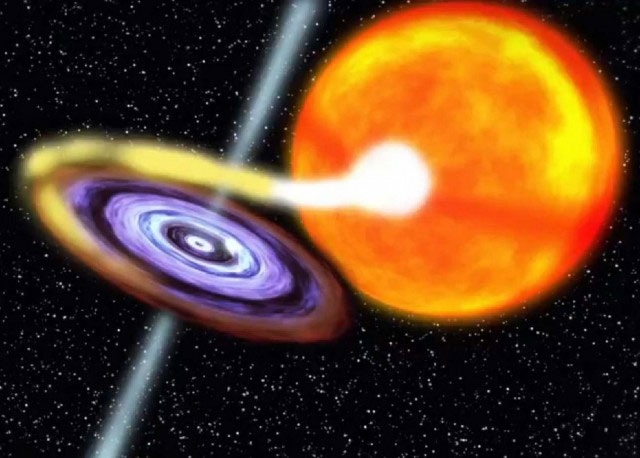
NASA said the Swift satellite had captured X-ray beams from a place near the center of the Milky Way, evidence that the existence of a previously unknown black hole.
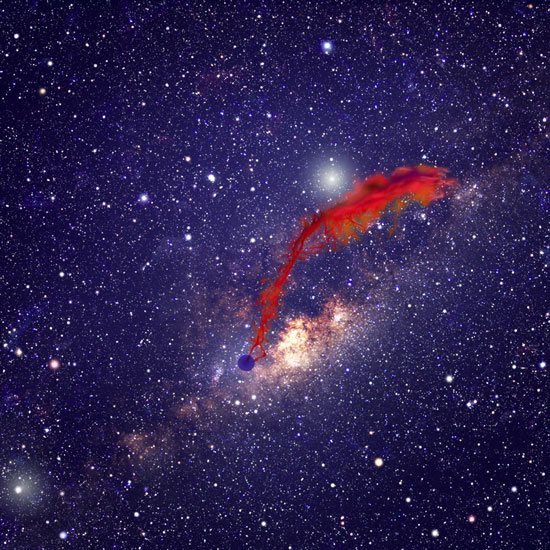
At the center of the Milky Way, the crowded stars are packed close together, supernova explosions emitting horrific shock and radiation waves, not to mention the greedy
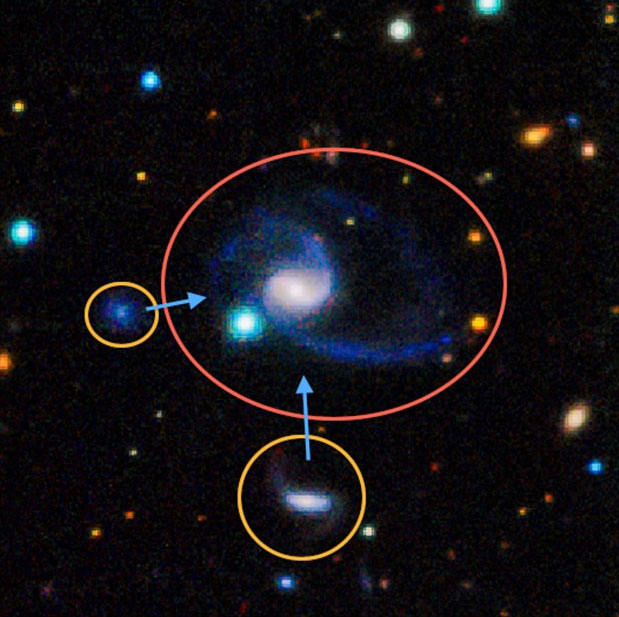
For the first time, astronomers have discovered two galaxies that are almost identical to our Milky Way galaxy.
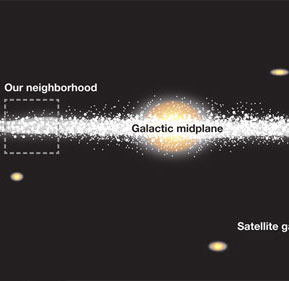
That's the conclusion of a group of Canadian and American astronomers, based on the findings that the Milky Way might have encountered a satellite galaxy or a large stru…
Our galaxy may contain more than 100,000 planets that move freely, not belonging to any solar system. That is the conclusion drawn from the study of planets
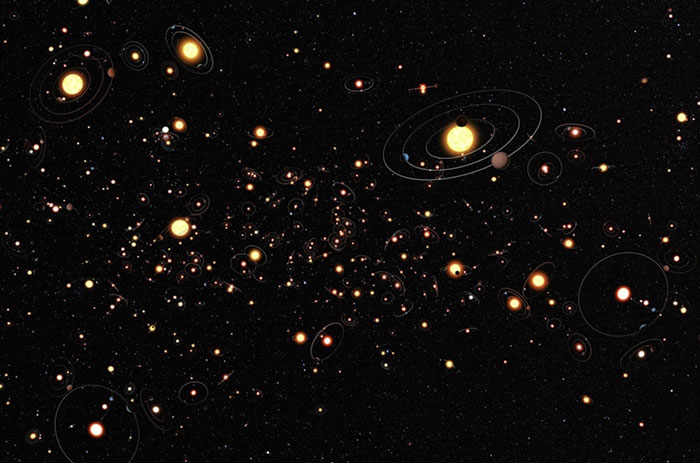
Our Milky Way Range has at least 100 billion planets according to a detailed statistical study based on the discovery of three extrasolar planets thanks to microlensing.